
Revista Portuguesa de Estomatologia, Medicina Dentária e Cirurgia Maxilofacial
SPEMD - Revista Portuguesa de Estomatologia Medicina Dentária e Cirurgia Maxilofacial | 2026 | 67 (1) | 2-10
Original research
Pregnant and postpartum women’s perceptions and use of Portugal’s dental voucher during pregnancy: preliminary results
Perceções e utilização do cheque-dentista na gravidez em Portugal por mulheres grávidas e puérperas: resultados preliminares
a Faculdade de Medicina Dentária da Universidade do Porto, Porto, Portugal
b EPIUnit of Instituto de Saúde Pública da Universidade do Porto, Porto, Portugal
c Laboratory for Integrative and Translational Research in Population Health (ITR) of Instituto de Saúde Pública da Universidade do Porto, Porto, Portugal
Leonor Frey-Furtado - lfurtado@fmd.up.pt
Article Info
Rev Port Estomatol Med Dent Cir Maxilofac
Volume - 67
Issue - 1
Original research
Pages - 2-10
Go to Volume
Article History
Received on 03/09/2025
Accepted on 04/01/2026
Available Online on 11/03/2026
Keywords
Original Research
Pregnant and postpartum women’s perceptions and use of Portugal’s dental voucher during pregnancy: preliminary results
Perceções e utilização do cheque-dentista na gravidez em Portugal por mulheres grávidas e puérperas: resultados preliminares
Leonor Frey-Furtado1,2,3,* 0000-0002-1571-0924
Paulo Melo1,2,3 0000-0003-3590-4926
Maria Lurdes Pereira1,2,3 0000-0002-4076-6014
1 Faculdade de Medicina Dentária da Universidade do Porto, Porto, Portugal
2 EPIUnit of Instituto de Saúde Pública da Universidade do Porto, Porto, Portugal
3 Laboratory for Integrative and Translational Research in Population Health (ITR) of Instituto de Saúde Pública da Universidade do Porto,
Article history:
Received 3 September 2025
Accepted 4 January 2026
Available online 11 March 2026
Abstract
Objectives: To assess pregnant women’s perceptions of oral health, their knowledge and use of the Dental Voucher program in Portugal, and the factors underlying its utilization.
Methods: The cross-sectional pilot study was conducted from October 2024 to September 2025 in 11 health local units in Portugal. A 31-item mandatory online questionnaire was applied, covering (i) demographics and socioeconomic status, (ii) oral hygiene practices and dental attendance patterns, (iii) perceived importance of oral health, and (iv) awareness and use of the dental vouchers. Descriptive analyses were performed. Furthermore, dental voucher data were extracted from the Portuguese National Health Service Transparency Portal and Statistics Portugal (INE).
Results: Participants were predominantly urban (71%), highly educated (81.5% with a higher education degree), and employed (81.6%). While 89.5% recognized the link between oral and general health, 23.7% were unaware of the impact of oral health on pregnancy outcomes. Despite 81.6% reporting awareness of the Dental Voucher program, only 39.5% used a voucher; among users, 23.7% considered the benefit inadequate. National data show that utilization rates of maternal dental vouchers plateaued at 70–85%, while population coverage remained below 50%.
Conclusions: This pilot study highlights gaps in voucher utilization, even among well-informed, educated women. Despite progress in raising awareness and expanding access, the Dental Voucher program remains underutilized. Strengthening oral health literacy, expanding access, modernizing digital systems, and improving program promotion are essential to maximize uptake and reduce preventable oral disease among pregnant women in Portugal.
Keywords: Dental care, Dental Health Surveys, Oral health, Pregnant women.
Resumo
Objetivos: Avaliar as perceções das grávidas relativamente à saúde oral, ao conhecimento e à utilização do programa Cheque-Dentista e aos fatores que a condicionam.
Métodos: Realizou-se um estudo-piloto transversal entre outubro de 2024 e setembro de 2025, em 11 Unidades Locais de Saúde em Portugal. Aplicou-se um questionário online obrigatório de 31 itens a 38 participantes, abrangendo (i) dados demográficos e situação socioeconómica, (ii) práticas de higiene oral e cuidados de saúde oral, (iii) importância da saúde oral e (iv) conhecimento e utilização do Cheque-Dentista. Efetuaram-se análises descritivas. Também se extraíram dados do Portal da Transparência do Sistema Nacional de Saúde e do Instituto Nacional de Estatística.
Resultados: A maioria das participantes residia em meio urbano (71%), possuía escolaridade elevada (81,5% com ensino superior) e encontrava-se profissionalmente ativa (81,6%). Verificou-se que 89,5% reconheciam a relação entre saúde oral e saúde geral, mas 23,7% desconheciam a influência da saúde oral na gravidez. Embora 81,6% conhecessem o Cheque-Dentista, apenas 39,5% o tinham utilizado, das quais 23,7% o consideraram insuficiente. Os dados nacionais indicam taxas de utilização de 70-85% entre grávidas, mas com cobertura < 50%.
Conclusões: Este estudo-piloto revela fragilidades na adesão ao programa, mesmo entre mulheres informadas e com escolaridade elevada. Apesar dos progressos na expansão do Cheque-Dentista, a sua utilização permanece aquém. Reforçar a literacia em saúde oral, melhorar a acessibilidade, modernizar os sistemas digitais e divulgar mais eficazmente são estratégias essenciais para aumentar a adesão e reduzir a prevalência de doenças orais preveníveis na gravidez em Portugal
Palavras-chave: Cuidados dentários, Inquéritos sobre saúde dentária, Saúde oral, Mulheres grávidas.
Introduction
Oral health in Portugal remains a significant public health challenge. In 2019, according to Statistics Portugal (Instituto Nacional de Estatística, INE), 15.9% of the population rated their oral health status as poor or very poor, with worse outcomes among women and those with lower levels of education.1 By 2023, Portugal had the third-highest level of unmet dental care needs in the European Union, affecting 8.7% of the total population and 19.3% of low-income groups, with financial hardship cited as the primary barrier.2 These figures highlight how direct out-of-pocket costs, within a system where most care is delivered privately, continue to exacerbate social and economic inequities.1 - 5
The consequences of limited access to oral care extend beyond the mouth, as untreated oral disease is linked to systemic conditions, increased healthcare expenditures, and a reduced quality of life.3, 6 During pregnancy, these effects are significant. Pregnant women face compounded challenges in accessing oral health care, primarily due to cost-related barriers, insufficient health literacy, including prevalent misconceptions regarding the safety of dental treatments during pregnancy, and a general lack of awareness concerning the oral-systemic health connections.7 The implications of these access barriers are clinically significant; for example, maternal periodontitis has been linked to higher risk of adverse pregnancy outcomes, including preterm birth, low birth weight, and preeclampsia.8 - 10
In response to some of these disparities, Portugal’s National Oral Health Promotion Program (PNSPSO) created the Dental Voucher (in Portuguese, Cheque-Dentista) program in 2008.11 This program provides pregnant women with up to three annual dental vouchers, which cover preventive care and curative treatments, paying the dentist at a rate of 45€ per voucher. Vouchers are issued by Portuguese
National Health Service (SNS) primary care units, and beneficiaries can select any dentist who has signed a contract with the state to participate in the program. These dentists are required to conduct an initial assessment, create a treatment plan within the established three-voucher framework, and prioritize the control of oral disease within this allowance.11
Although dental voucher usage has improved, it still remains below expectations, and routine data on barriers and determinants are lacking. This evidence gap constrains policymakers’ capacity to optimize program delivery. Therefore, this study aims to assess how pregnant women in Portugal perceive the significance of oral health, quantify their utilization rate of the Dental Voucher program, and identify operational limitations of the program.
Material and Methods
This cross-sectional study was conducted between October 2024 and September 2025 to assess oral health practices, awareness, and utilization regarding the Dental Voucher program among pregnant women in Portugal. The study followed STROBE guidelines for cross-sectional research.
Ethical approval was granted by the Ethics Committee for Health of the Faculty of Dental Medicine, University of Porto (Ref. 26/2023), and the University of Porto Data Protection Office (Ref. A-11/2024). The study took place across Portuguese Local Health Units (Unidades Locais de Saúde, ULSs). After project approval, the SNS Executive Directorate (Direção Executiva do SNS) sent na endorsement email to all ULSs, followed immediately by direct emails from the research team. Eleven units completed their internal ethics procedures and agreed to participate: São João, Médio Tejo, Guarda, Algarve, Póvoa de Varzim/Vila do Conde, Estuário do Tejo, Lezíria, São José, Litoral Alentejano, Oeste, and Entre Douro e Vouga. Participating units were asked to display the study poster in patient-visible areas and, when possible, identify a person of contact, such as a chief nurse. Despite follow-up reminders, the remaining units and three contacted private hospitals did not respond.
Eligible participants were pregnant women at any gestational stage or women attending a consultation within 60 days postpartum. Ineligible individuals were automatically prevented from completing the survey through embedded screening in the online form.
Data were collected using a 31-item web-based questionnaire developed by the research team and deployed through Google Forms under a University of Porto license. The questionnaire covered demographics, socioeconomic characteristics, oral health practices, perceived importance of oral health, and awareness and use of the Dental Voucher program for pregnant women (Appendix 1) . A pilot test with 15 pregnant women confirmed clarity and feasibility, with a completion time under 10 minutes. All items were mandatory, ensuring complete datasets; internal consistency analysis was not yet performed due to the preliminary nature of this report.
Program utilization data were obtained from two national sources: the SNS Transparency Portal (Portal da Transparência do SNS), which provided records of voucher issuance and redemption from 2008 to 2024, and the INE, which supplied annual live birth statistics for the same period.
Descriptive statistics for questionnaire responses were generated using IBM SPSS Statistics 29. Administrative data on voucher issuance, redemption, and live births were analyzed in Microsoft Excel to describe temporal patterns in program performance. Two indicators were calculated. The utilization rate was defined as the proportion of vouchers redeemed relative to those issued each year: Utilization rate = (Vouchers redeemed / Vouchers issued) × 100 Coverage was defined as the proportion of live births for which at least one voucher was used: Coverage = (Vouchers redeemed / 3) / Live births × 100
The division by three accounts for the allocation of three vouchers per pregnancy. For years with missing birth data, coverage estimates were not calculated. These methods allowed for consistent year-by-year comparisons and assessment of temporal trends in program uptake.
Results
This preliminary analysis includes 38 participants recruited from three regions of Portugal: Lisbon Metropolitan Area, Center, and North. Table 1 displays demographic and socioeconomic characteristics. Most assessments occurred in the third trimester (39.5%, n=15), and just over half of respondents (52.6%, n=20) already had at least one child.
Table 1. Demographic and socioeconomic characterization
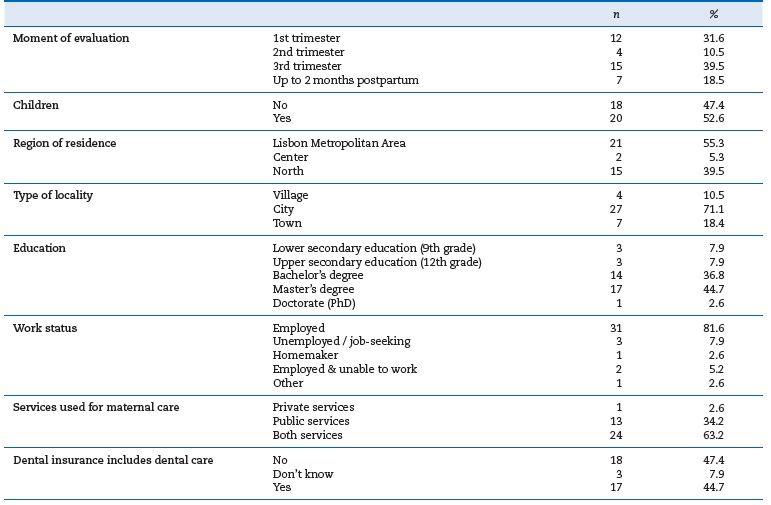
The participants lived mostly in urban areas (71.1% in cities versus 28.9%, 11 participants, in towns or villages), were highly educated (81.5% with a higher education degree), and were mainly employed (81,6%, n=31). Almost half (42.1%, n=16) reported needing to budget carefully over the past year, and less than half of the participants (44.7%, n=17) had dental care coverage through their health insurance.
Regarding oral health-related behaviors and beliefs (Figures 1 and 2), 86.8% did not change their brushing frequency during pregnancy, and 36.8% were unsure whether their toothpaste contained fluoride. Daily tongue cleaning (39.5%) and mouthwash use (18.4%) were uncommon. Although 52.6% attended at least one dental check-up annually, 26.3% only sought care when experiencing problems, and 92.1% continued to visit the dentist throughout their pregnancy.
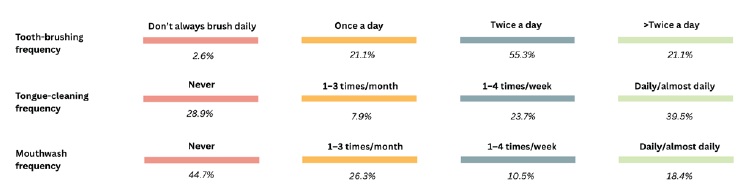
Figure 1. Oral health practices
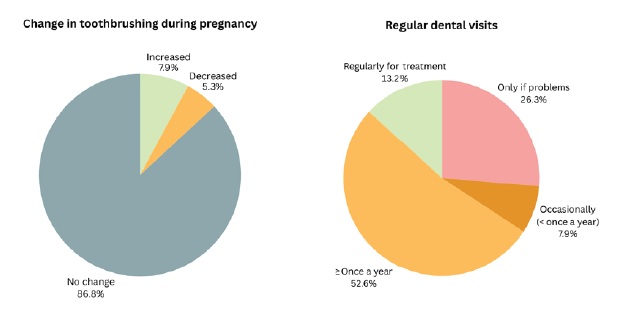
Figure 2. Changes in toothbrushing habits during pregnancy and dental visit frequency
While 89.5% of respondents agreed that oral health affects overall health, 23.7% were unaware of its impact on pregnancy outcomes (Figure 3). Only 52.6% of the participants reported having received information about oral health during pregnancy.
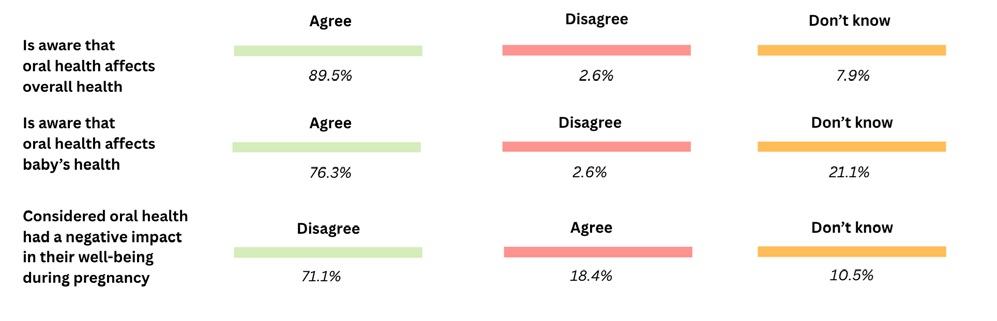
Figure 3. Awareness of the impact of oral health on general health and pregnancy outcomes
The awareness of the Dental Voucher program was high (81.6%, n=31), yet only 39.5% (n=15) used the vouchers (Figure 4). Among users, 23.7% indicated that the dental vouchers did not meet their needs. The reasons for not using the dental vouchers included structural barriers, such as the absence of clinics in their town or residential area that accepted the voucher; provider-related concerns, described as “dentist incompetence”; preference for attending their regular dentist, who did not participate in the voucher program; and informational shortcomings, such as not receiving the voucher or not knowing how to use it.
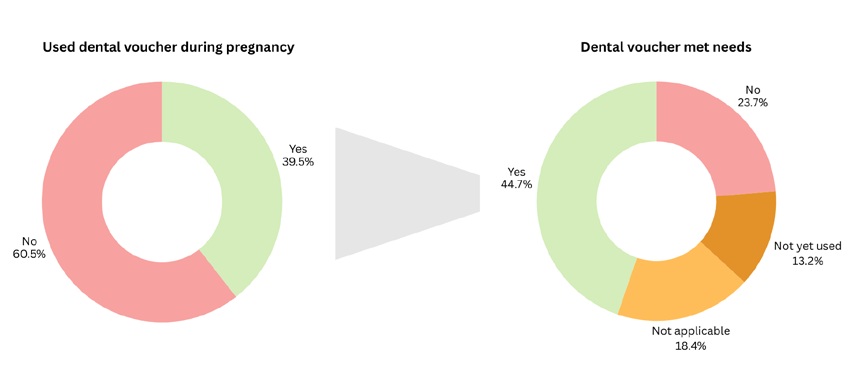
Figure 4. Utilization of the dental voucher by pregnant women
The primary sources of information were their General Practitioner (47.4%) and personal contacts (13.2%) (Figure 5). Finally, 65.8% knew their children were also entitled to dental vouchers. Analysis of national data from the SNS Transparency Portal12 and INE13 revealed important trends in program utilization between 2008 and 2024 (Table 2 and Figure 6). Voucher issuance for pregnant women increased substantially from approximately 33,004 in 2008 to over 115,073 in 2024.12 From 2008 to 2010, there was rapid growth in both voucher issuance and redemption, accompanied by parallel increases in the number of treatments performed. After 2010, the system stabilized with gradual growth but a persistent surplus of issued over redeemed vouchers. Voucher utilization rates peaked at 85% in 2009 but subsequently declined, plateauing around 70-80% from 2011 to 2019.
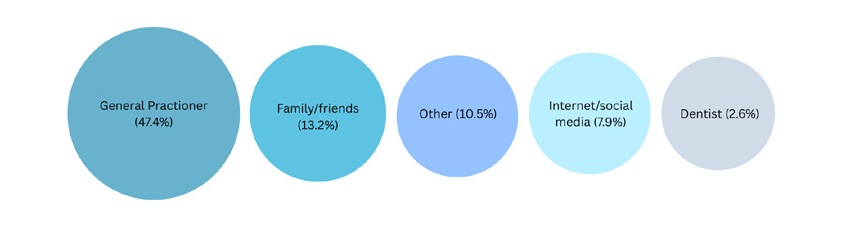
Figure 5. Sources of information on oral health and the Dental Voucher program for pregnant women
Table 2. Evolution of dental vouchers for pregnant women in Portugal (2008–2024)
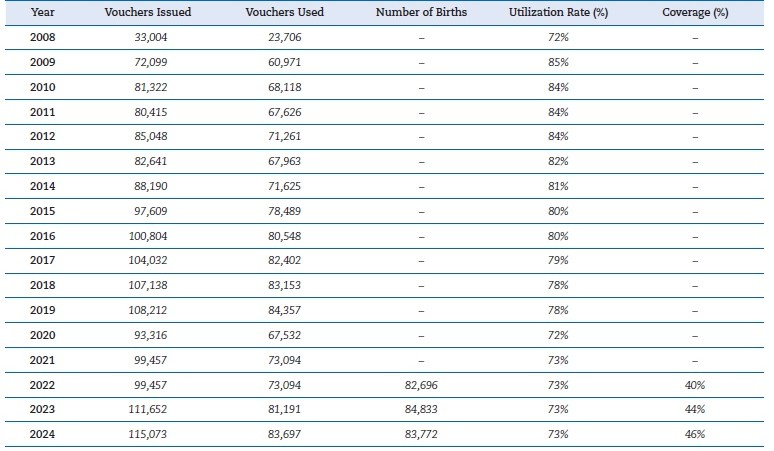
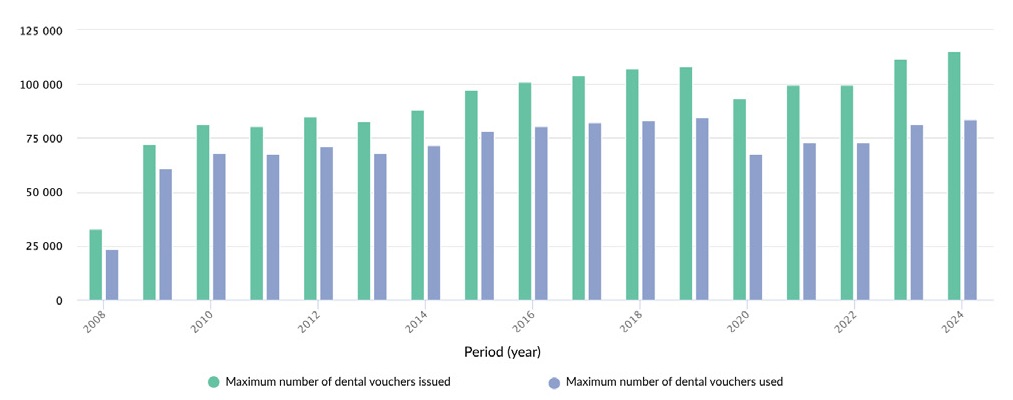
Figure 6. Dental vouchers issued and used by pregnant women (Data: Portal da Transparência do SNS12)
The trend remained stable until 2019, followed by a decline in 2020, coinciding with the COVID-19 pandemic. After 2021, usage and treatments recovered toward pre-pandemic levels.
However, utilization rates in recent years (2021−2024) have remained around 73%.
The column Vouchers Issued represents the total number of vouchers distributed annually, and Vouchers Used corresponds to the number of vouchers effectively redeemed12. The Number of Births is reported by Statistics Portugal (INE)13. Utilization Rate indicates the proportion of vouchers used relative to those issued. Coverage reflects the proportion of pregnant women (estimated from birth data) who use vouchers.
Coverage rates, calculated using live birth data from INE, show that 40-46% of pregnant women used at least one voucher during the period of 2022−2024. This indicates that over half of eligible women did not access the program. While voucher issuance steadily increased from 2008 to 2024, population coverage
has remained below 50% throughout recent years, highlighting a substantial disconnect between program expansion and effective utilization.
Discussion
This study provides the first national evaluation of Portugal’s Dental Voucher program for pregnant women, combining individual experiences with administrative data. Our findings reveal an implementation gap: despite the program’s expansion, coverage remains below 50%, with only 40-46% of pregnant
women using at least one voucher in recent years. This gap between policy expansion and population coverage warrants investigation.
When looking at utilization patterns, among our sample, program awareness was high (81.6%), yet utilization was markedly lower (39.5%). Participants who did not use vouchers despite awareness cited concrete barriers, such as a lack of participating dentists in their area, concerns about Provider quality, preference for their established dentist who did not accept vouchers, insufficient voucher value to cover treatment costs, and confusion about redemption procedures. Notably, 23.7% of users reported that the vouchers did not meet their needs, suggesting that even successful access does not guarantee adequate care.
The data also reveal challenges related to information and literacy. Only 52.6% of participants received oral health information during pregnancy, despite maintaining regular dental visits throughout this period. Furthermore, 23.7% were unaware that maternal oral health can affect pregnancy outcomes.
This knowledge gap is particularly concerning given that General Practitioners served as the primary information source, suggesting inconsistent messaging across prenatal care touchpoints.
Indeed, a systematic review concluded that while prenatal care practitioners recognize the importance of oral health during pregnancy, they frequently fail to translate this knowledge into clinical practice.14 This finding highlights the urgente need for two complementary interventions: (i) ensuring foundational oral health knowledge among prenatal care practitioners, and (ii) developing standardized pamphlets and clinical guidelines for dissemination during prenatal and postnatal appointments at health centers.
Improved information delivery may empower pregnant women to make informed decisions regarding oral healthcare utilization. This is particularly relevant as the literature identifies several persistent barriers to dental care-seeking during pregnancy, including concerns about fetal safety during dental procedures, beliefs about inevitable pregnancy-related dental deterioration, and general lack of awareness regarding the importance of oral health maintenance during gestation.7, 15
The national data reveal an intriguing pattern that underscores the importance of understanding utilization determinants. Voucher utilization rates—measuring vouchers redeemed as a percentage of vouchers issued — have remained relatively high, stabilizing around 70-80% throughout most of the program’s years. At face value, these figures suggest reasonable program performance: most women who receive vouchers do use them. However, when population coverage — the proportion of pregnant women who actually access the program — is considered, a different picture emerges. Only 40-46% of women who gave birth in 2022-2024 used at least one voucher, meaning the program fails to reach over half of eligible women.
This disconnect raises critical questions about program access and resource allocation. Crucially, this pattern represents significant resource inefficiency: vouchers are issued but not redeemed, while simultaneously many pregnant women who could benefit from care never access it. Understanding who uses the program, who does not, and critically, why non-users do not engage was precisely the motivation for this study. Without this knowledge, the system cannot differentiate between women who opt not to participate and those who face barriers — a distinction vital for effective intervention design.
Moreover, the persistent gap between voucher issuance and population reach suggests opportunities for resource reallocation: unused vouchers could be redirected to women who require additional care beyond the standard allocation, addressing unmet clinical needs while reducing waste. However, implementing such reforms requires precisely the granular understanding of utilization determinants that current data systems do not capture.
Finally, our experience also yields insights into systemic challenges and methodologies. Our difficulty recruiting participants (n=38 despite contacting all ULSs nationally) is itself a finding that exposes fragmentation within the SNS. Portugal cannot improve what it does not measure. The last comprehensive national survey of oral health was published in 2015, and routine data collection on determinants of voucher uptake and oral health outcomes remains fragmented. These findings underscore the pressing need for improved data collection within the SNS. Without standardized, high-quality data on oral health behaviors and service utilization, policymakers cannot effectively monitor program performance or tailor interventions.
Bureaucratic obstacles, exemplified by our experience in the need for repeated ethical approvals and limited cooperation from the ULSs, further hinder research progresso and maintain evidence gaps. Integrating a unified data platform into the SNS infrastructure, supported by clear mandates for routine oral health metrics, may establish the feedback mechanisms necessary to refine and efficiently expand voucher programs. Equally important is fostering a research culture within ULSs, ensuring that frontline providers contribute to and benefit from a continuous cycle of data-driven improvement.
Without these reforms, access will remain fragmented, and the burden of preventable oral disease will remain unnecessarily high.
Strengths of this study include its focus on real-world behaviors within a national context and its detailed mapping of system-level and informational barriers. However, its small sample size (n = 38) and reliance on self-reported data limit external validity and may introduce recall and reporting biases. Furthermore, we only reached pregnant women who used primary care services, excluding those who used only private clinics or hospitals. Therefore, these preliminary findings do not allow for statistical inference or population-level stratification.
An important limitation of this pilot study is the inability to perform multivariate analyses due to sample size constraints. Additionally, the dental voucher data analysis assumes that each pregnancy redeems all three allocated vouchers; however, some women use fewer than three, which probably leads to an underestimation of utilization and coverage.
Additionally, coverage calculations are based on live births in the same calendar year, meaning pregnancies that result in miscarriage or births in the following year are not captured.
The complex decision-making process surrounding voucher utilization likely involves multiple factors that cannot be adequately examined through descriptive statistics alone.
Variables such as educational background, work status, prior dental experiences, and health insurance coverage may interact in ways that influence voucher uptake. However, our current analysis cannot control for the independent effects of these relationships. Future research with larger sample sizes should employ advanced statistical methods to better understand the multifaceted determinants of participation in the Dental Voucher program for pregnant women.
Conclusions
The Dental Voucher program for pregnant women demonstrates policy commitment, with voucher issuance quadrupling since 2008. However, this expansion has not translated into proportional population reach. Evidence-based reform must operate at multiple levels simultaneously:
• For individuals: integrate standardized oral health counseling and voucher information into first prenatal visits, implement SMS reminder systems, and simplify redemption procedures.
• For providers: adjust voucher values to reflect actual costs with inflation indexing, streamline administrative barriers, and expand networks in underserved regions.
• For the system: establish unified data platforms for real-time monitoring, mandate routine collection of oral health metrics, and foster an organizational culture that values implementation research.
Most urgently, the absence of updated and comprehensive oral health burden-of-disease surveillance, along with fragmented data systems, prevents the continuous learning necessary for program optimization. Without infrastructure to measure, monitor, and learn from implementation, even well-designed interventions cannot achieve their potential.
The program has demonstrated two decades of commitment; it now requires the evidence-based infrastructure and implementation focus necessary to fully realize its potential in reducing preventable oral disease among pregnant women in Portugal.
References
1. Instituto Nacional de Estatística. Estatísticas da Saúde – Dia Mundial da Saúde Oral. 2025. Available from: https://www.ine.pt/xportal/xmain?xpid=INE&xpgid=ine_destaques&DESTAQUESdest_boui=718020413&DESTAQUESmodo=2. Accessed 2 December, 2025.
2. Global Commission on Evidence to Address Societal Challenges (OECD). Health at a Glance: Europe 2024: State of Health in the EU Cycle. 2024. Available from: https://www.oecd.org/en/publications/health-at-a-glance-europe-2024_b3704e14-en.html. Accessed 2 December, 2025.
3. World Economic Forum. The Economic Rationale for a Global Commitment to Invest in Oral Health. 2024. Available from: https://www3.weforum.org/docs/WEF_The_Economic_Rationale_for_a_Global_Commitment_to_Invest_in_Oral_Health_2024.pdf. Accessed 2 December, 2025.
4. Jain N, Dutt U, Radenkov I, Jain S. WHO's global oral health status report 2022: Actions, discussion and implementation. Oral Dis. 2024;30:73-9.
5. Proaño D, Huang H, Allin S, Essue BM, Singhal S, Quiñonez C. Oral Health Care Out-of-Pocket Costs and Financial Hardship: A Scoping Review. J Dent Res. 2024;103:1197-208.
6. The Economist Group. Time to put your money where your mouth is: addressing inequalities in oral health. 2024. Available from: https://www.efp.org/fileadmin/uploads/efp/Documents/Other_publications/EIxEFP_-_Oral_Health_white_paper_FINAL.pdf. Accessed 2 December, 2025.
7. Frey-Furtado L, Fonseca M, Melo P, Listl S, Pereira ML. Oral healthcare access: self-perceived barriers faced during pregnancy - a systematic review. BMC Public Health. 2025;25:1394.
88. Abariga SA, Whitcomb BW. Periodontitis and gestational diabetes mellitus: a systematic review and meta-analysis of observational studies. BMC Pregnancy Childbirth. 2016;16:344.
9. Fakheran O, Keyvanara M, Saied-Moallemi Z, Khademi A. The impact of pregnancy on women’s oral health-related quality of life: a qualitative investigation. BMC Oral Health. 2020;20:294.
10. Yenen Z, Ataçağ T. Oral care in pregnancy. J Turk Ger Gynecol Assoc. 2019;20:264-8.
11. Simões J, Augusto GF, do Céu A, Ferreira MC, Jordão M, Calado R, et al. Ten years since the 2008 introduction of dental vouchers in the Portuguese NHS. Health Policy. 2018;122:803-7.
12. Serviço Nacional de Saúde (SNS). Portal da Transparência do Serviço Nacional de Saúde. 2025. Available from: https:// transparencia.sns.gov.pt/explore/embed/dataset/saude-oral/. Accessed 2 December, 2025.
13. Instituto Nacional de Saúde. Partos (N.º) por Local de residência da mãe e Natureza do parto; Anual [Internet]. 2025. Available from: https://www.ine.pt/xportal/xmain?xpid=INE&xpgid=ine_indicadores&indOcorrCod=0013168&contexto=bd&selTab=tab2&xlang=PT. Accessed 5 December, 2025.
14. Anunciação BH, Azevedo MJ, Pereira ML. Knowledge, attitudes, and practices of prenatal care practitioners regarding oral health in pregnancy-A systematic review. Int J Gynaecol Obstet. 2023;162:449-61.
15. Bahramian H, Mohebbi S, Khami M, Quinonez R. Qualitative exploration of barriers and facilitators of dental servisse utilization of pregnant women: A triangulation approach. BMC Pregnancy Childbirth. 2018;18:153.
Leonor Frey Furtado
E-mail address: lfurtado@fmd.up.pt
Acknowledgments
The authors would like to express their sincere gratitude to all participating ULS.
Appendix. Supplementary content
Supplementary data associated with this article can be found, in
the online version, at https://administracao.spemd.pt/app/assets/imagens/files_img/1_19_6a16a6ddb52de.pdf.
Conflict of interest
The authors have no conflicts of interest to declare.
Ethical disclosures
Protection of human and animal subjects. The authors declare that no experiments were performed on humans or animals for this study.
Confidentiality of data. The authors declare that they have followed their work center protocols on access to patient data and for its publication.
Right to privacy and informed consent. The authors have obtained the written informed consent of the patients or subjects mentioned in the article. The corresponding author is in possession of this document.
CRediT authorship contribution statement
Leonor Frey-Furtado: Conceptualization, Investigation, Methodology, Visualization, Writing – original draft; Writing – review & editing. Paulo Melo: Conceptualization, Writing – review & editing. Maria Lurdes Pereira: Conceptualization, Writing – review & editing.
1646-2890/© 2026 Sociedade Portuguesa de Estomatologia e Medicina Dentária. Published by SPEMD.
This is an open access article under the CC BY-NC-ND license (http://creativecommons.org/licenses/by-nc-nd/4.0/).